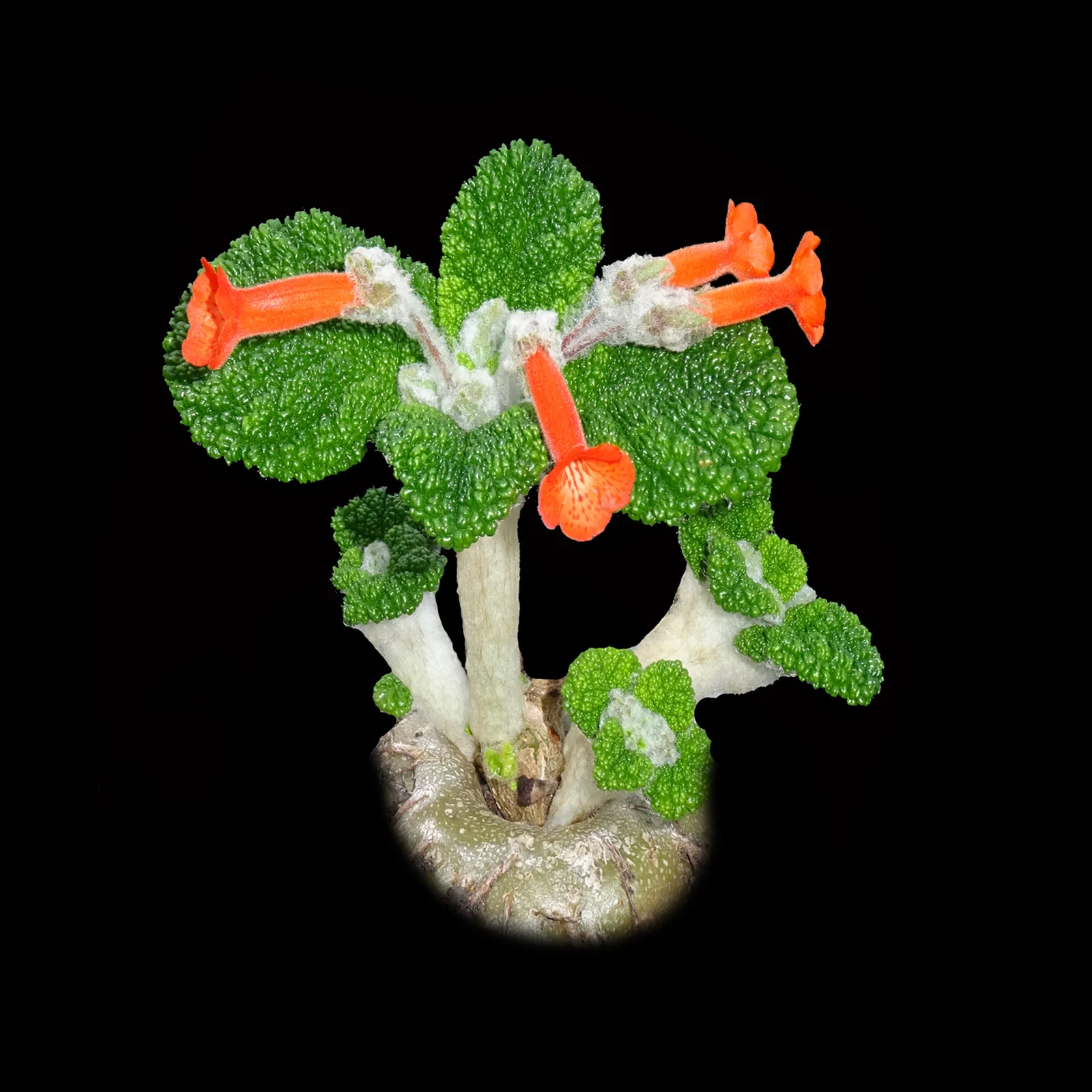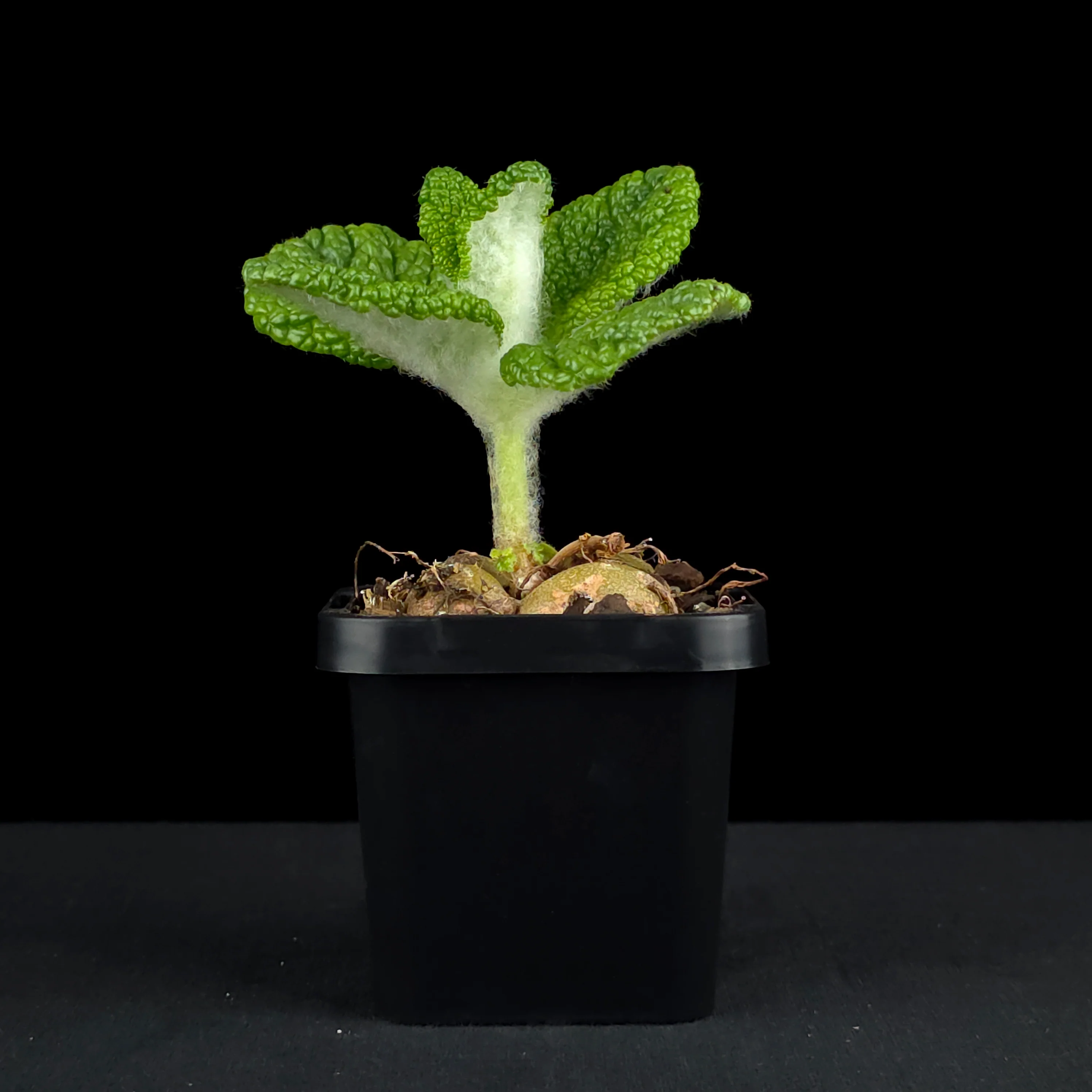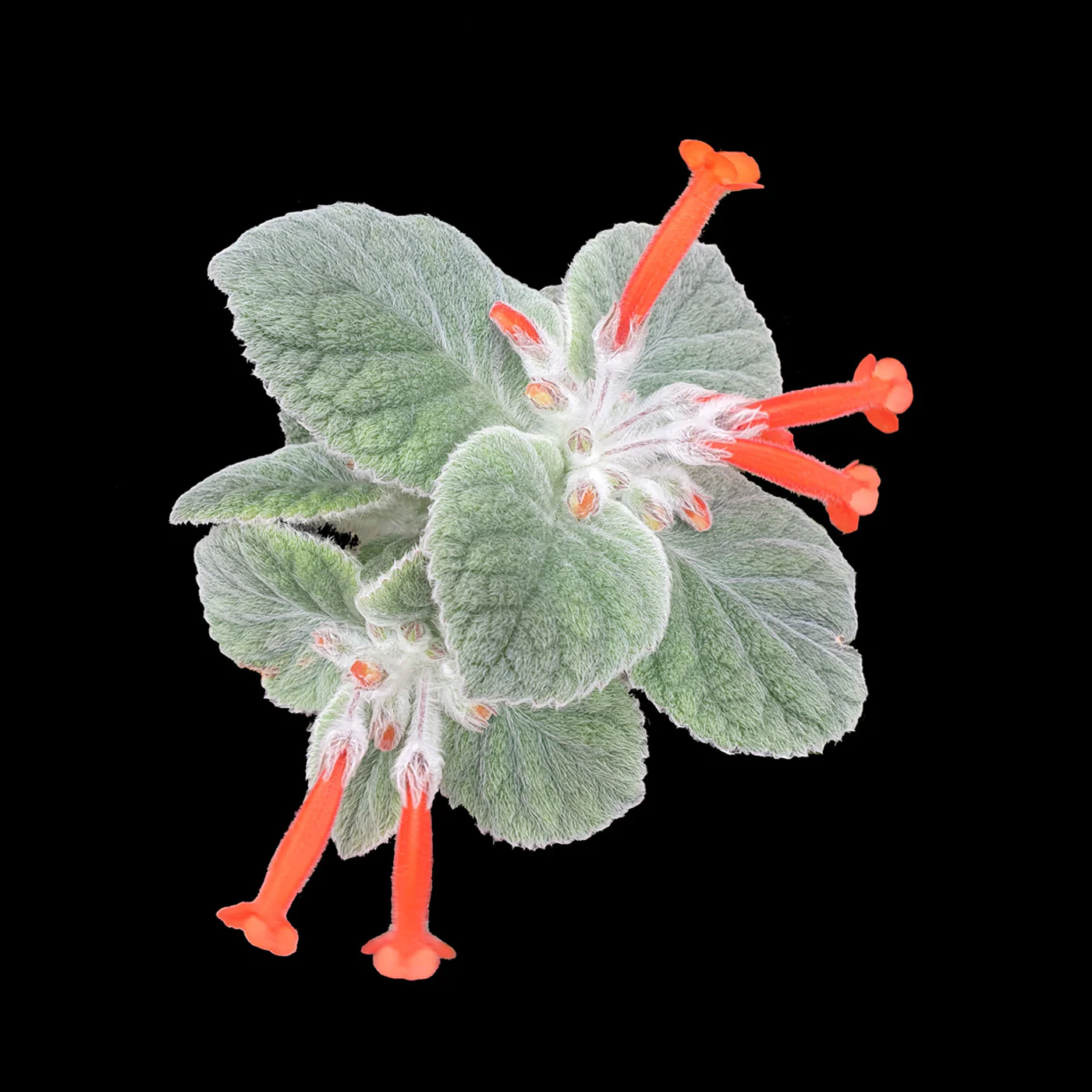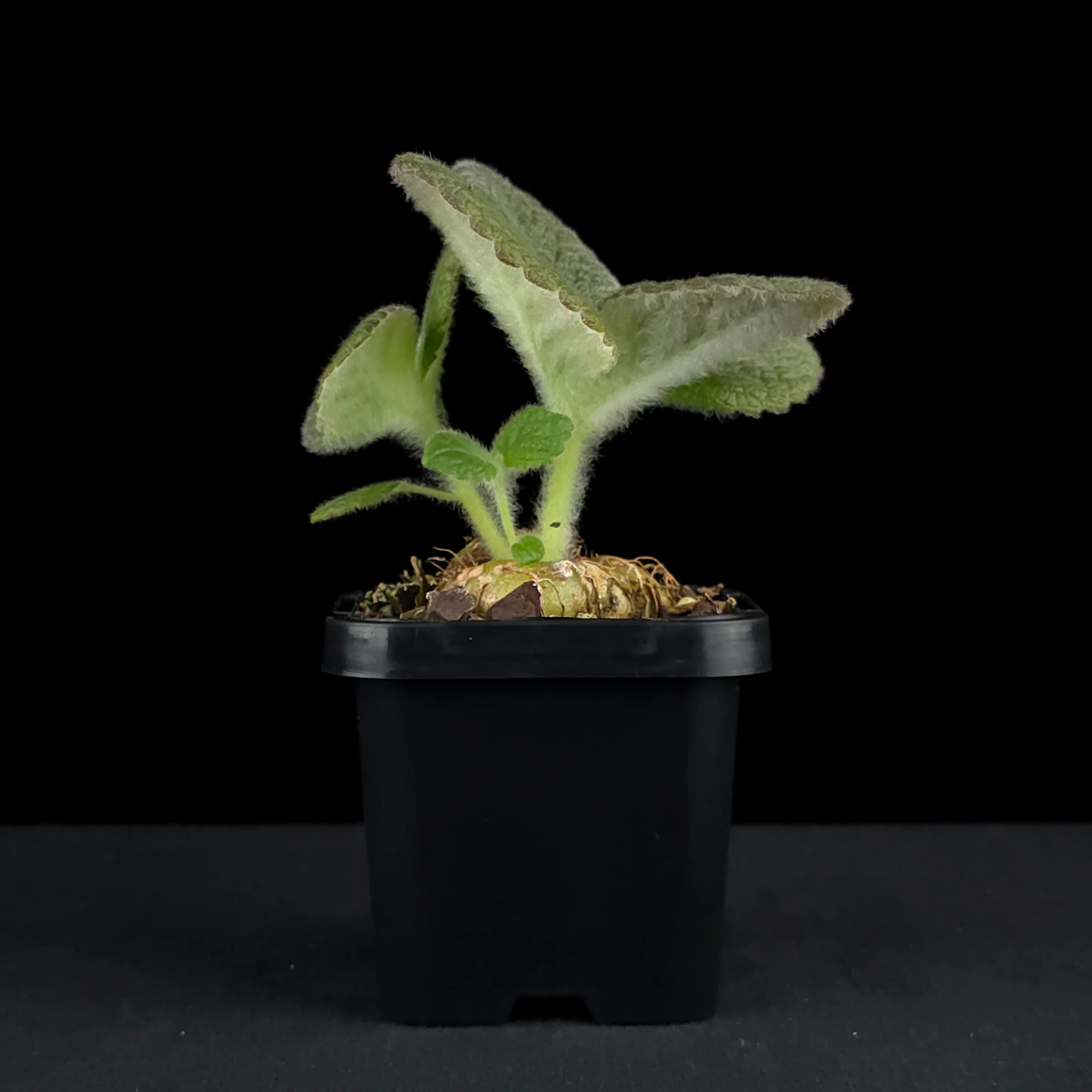

Calibanus hookeri
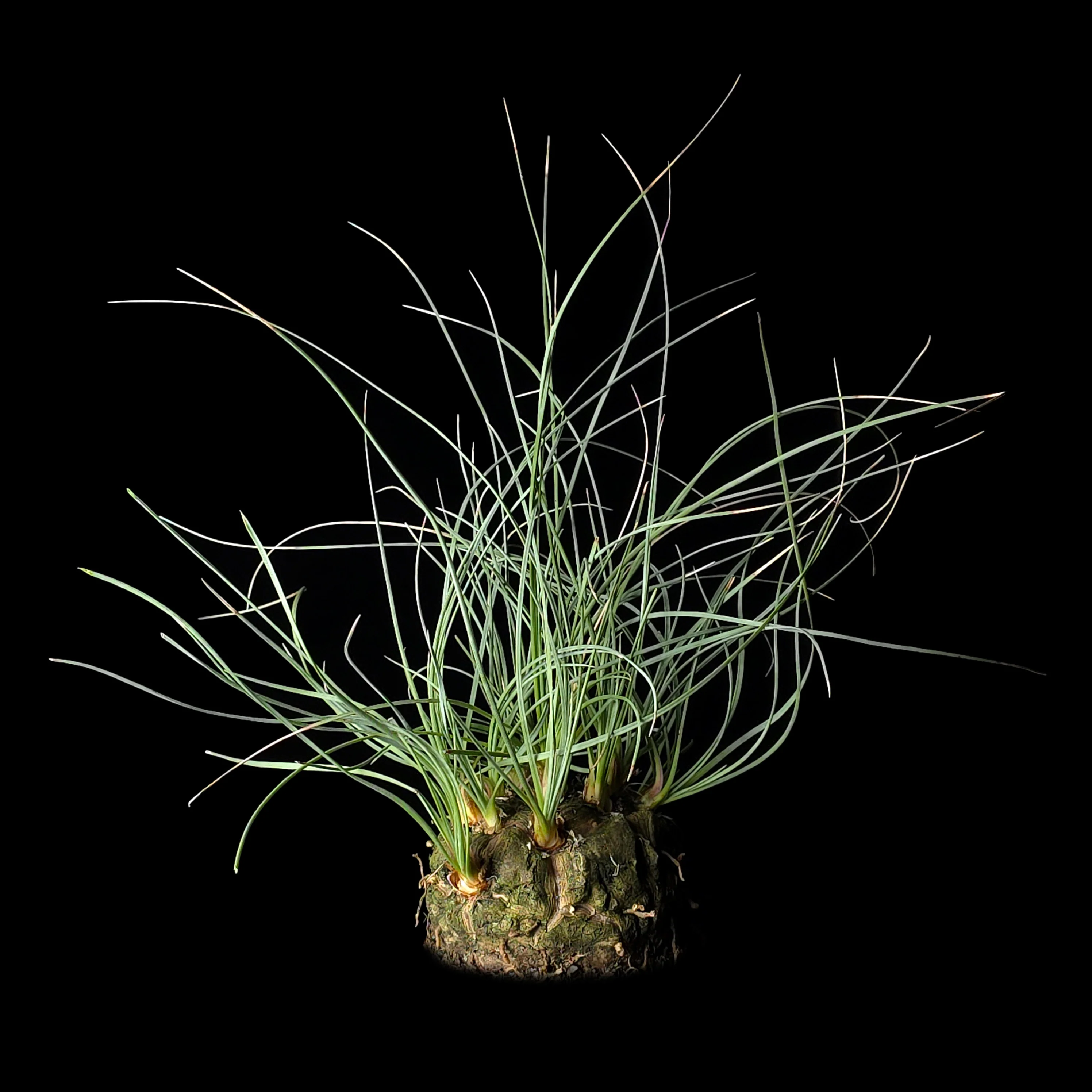
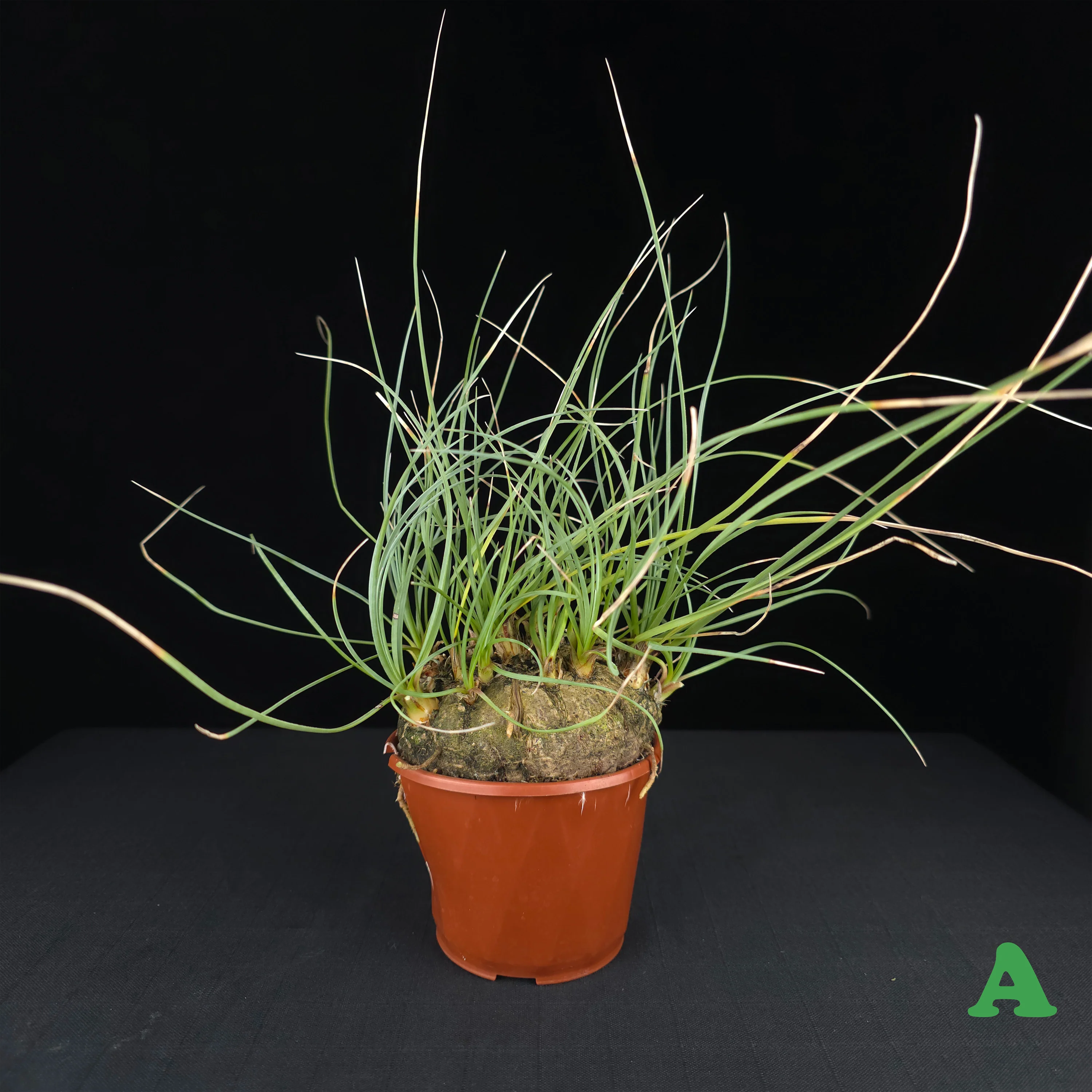
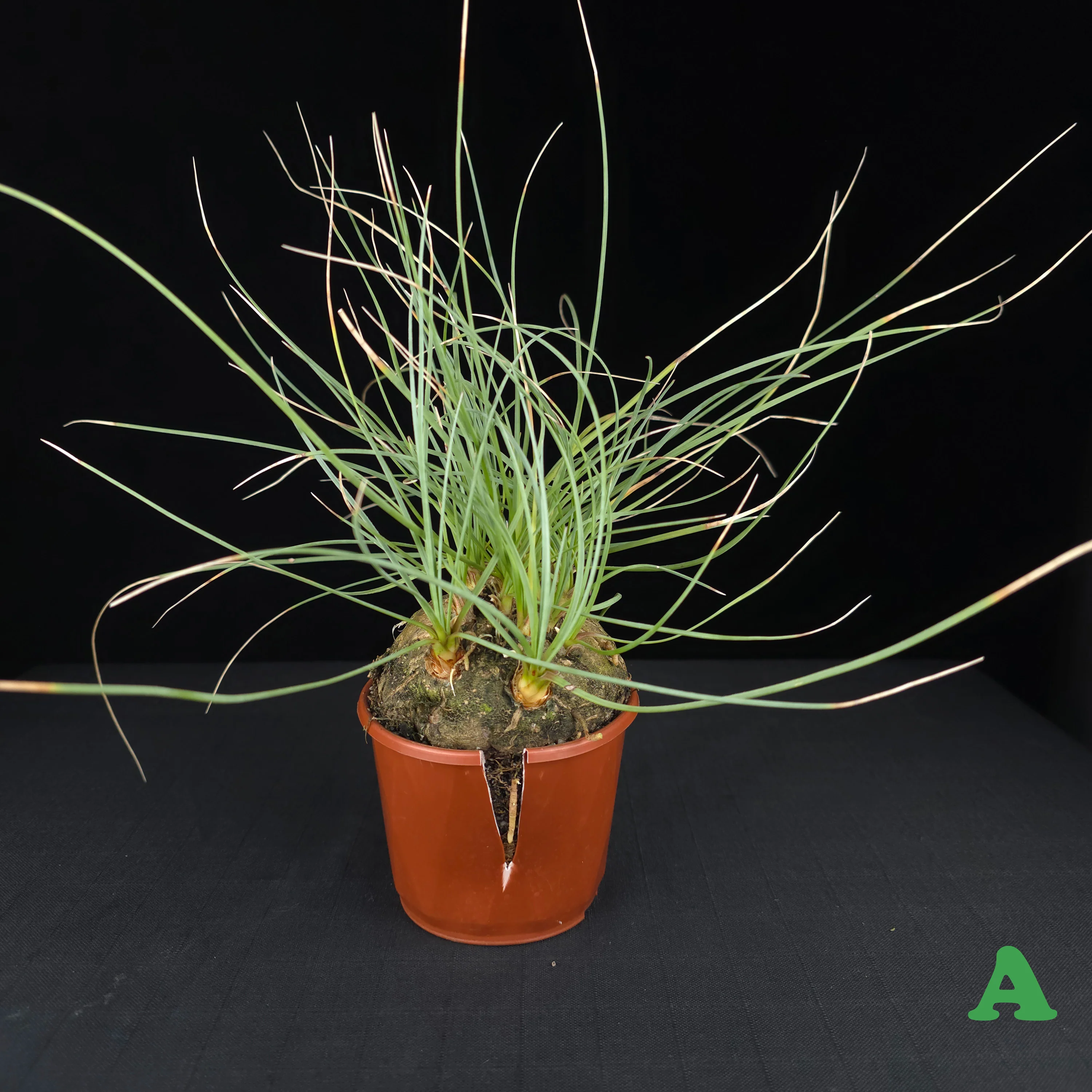
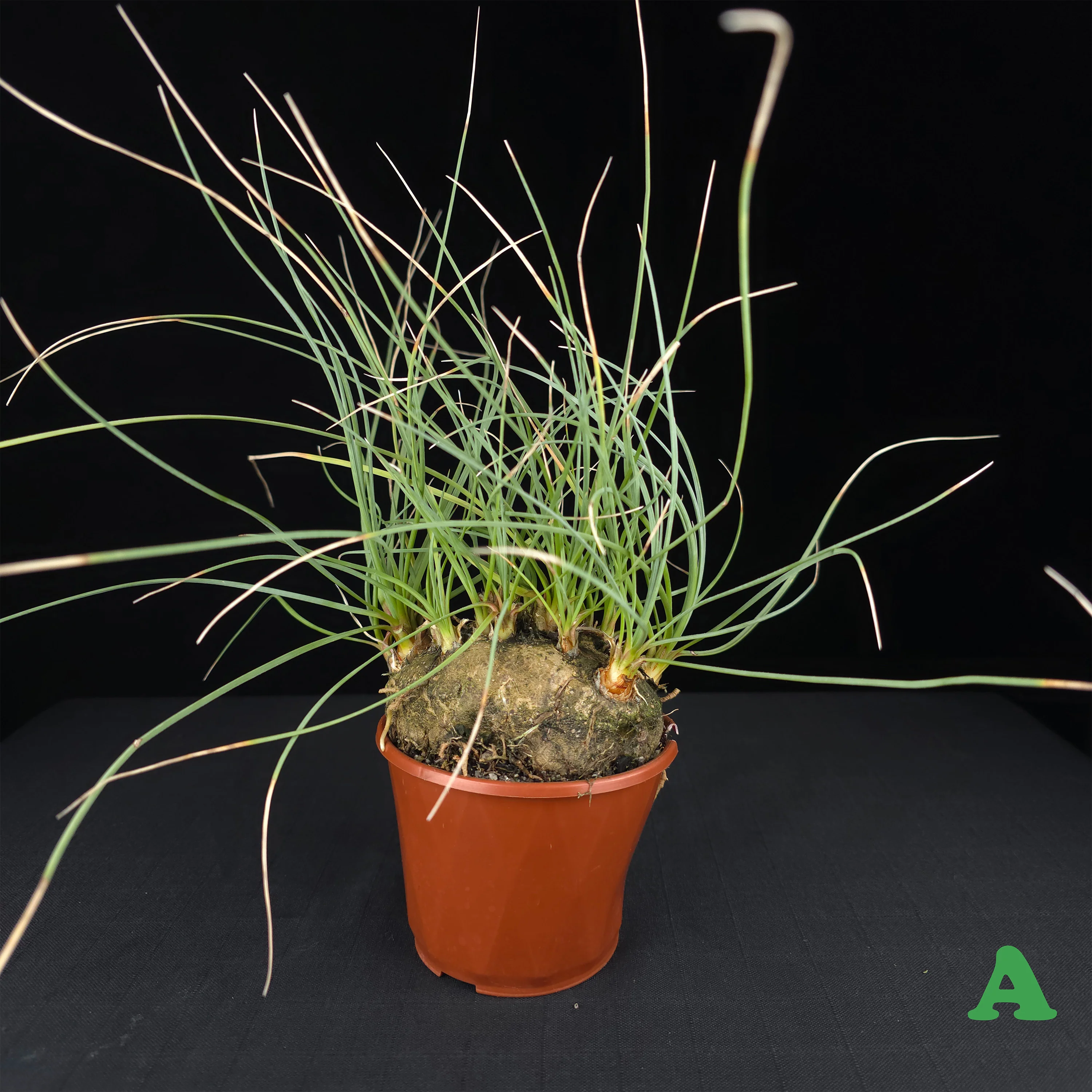
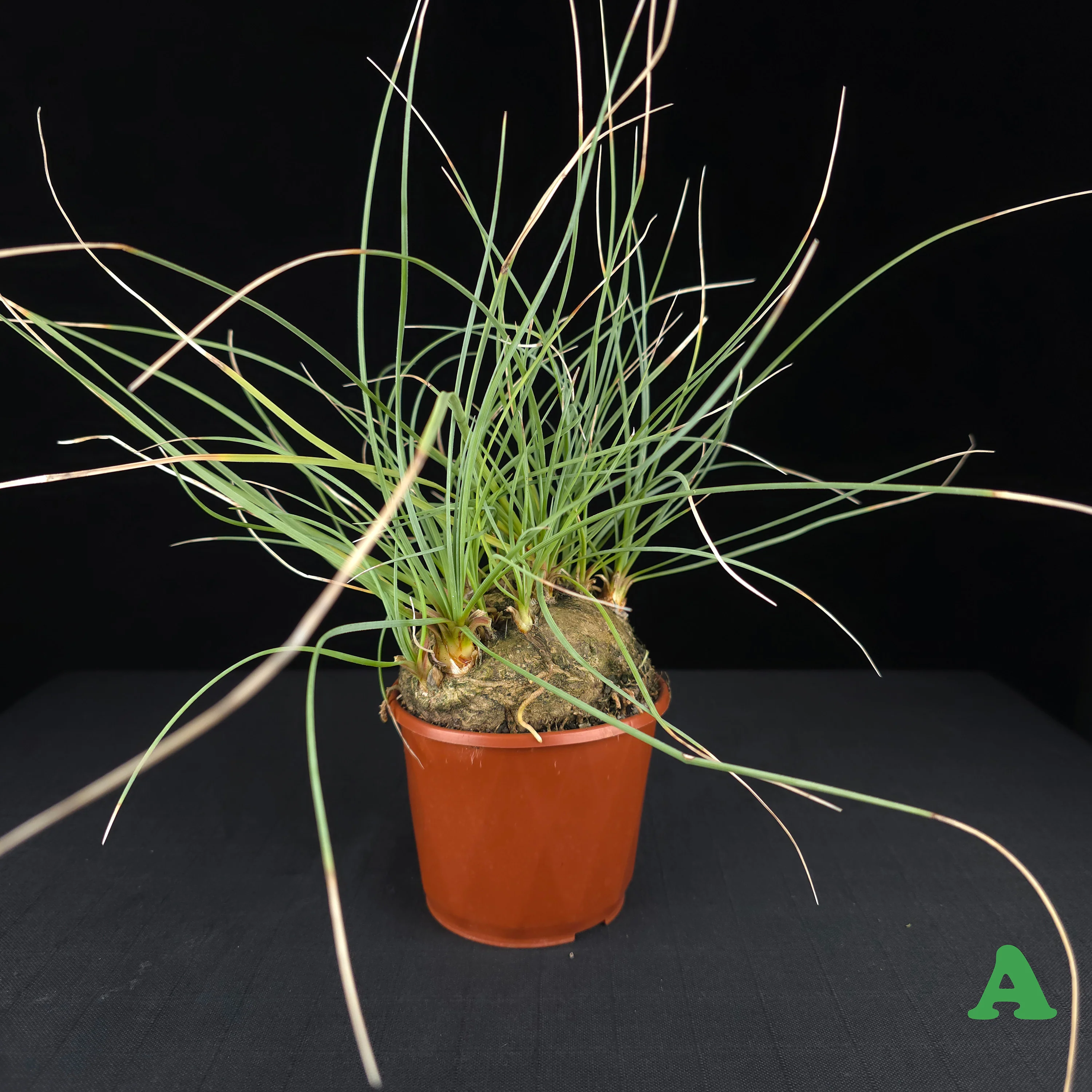
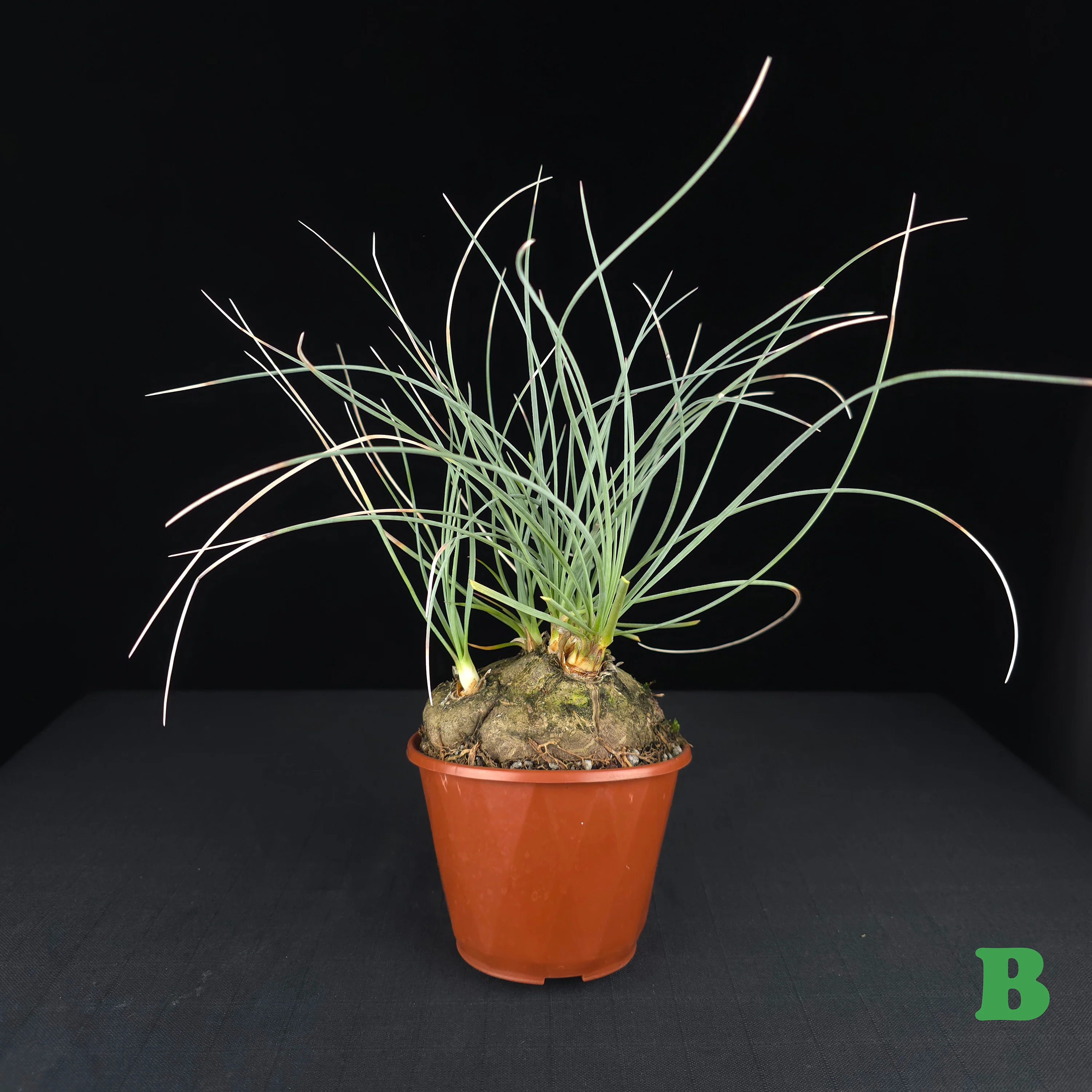
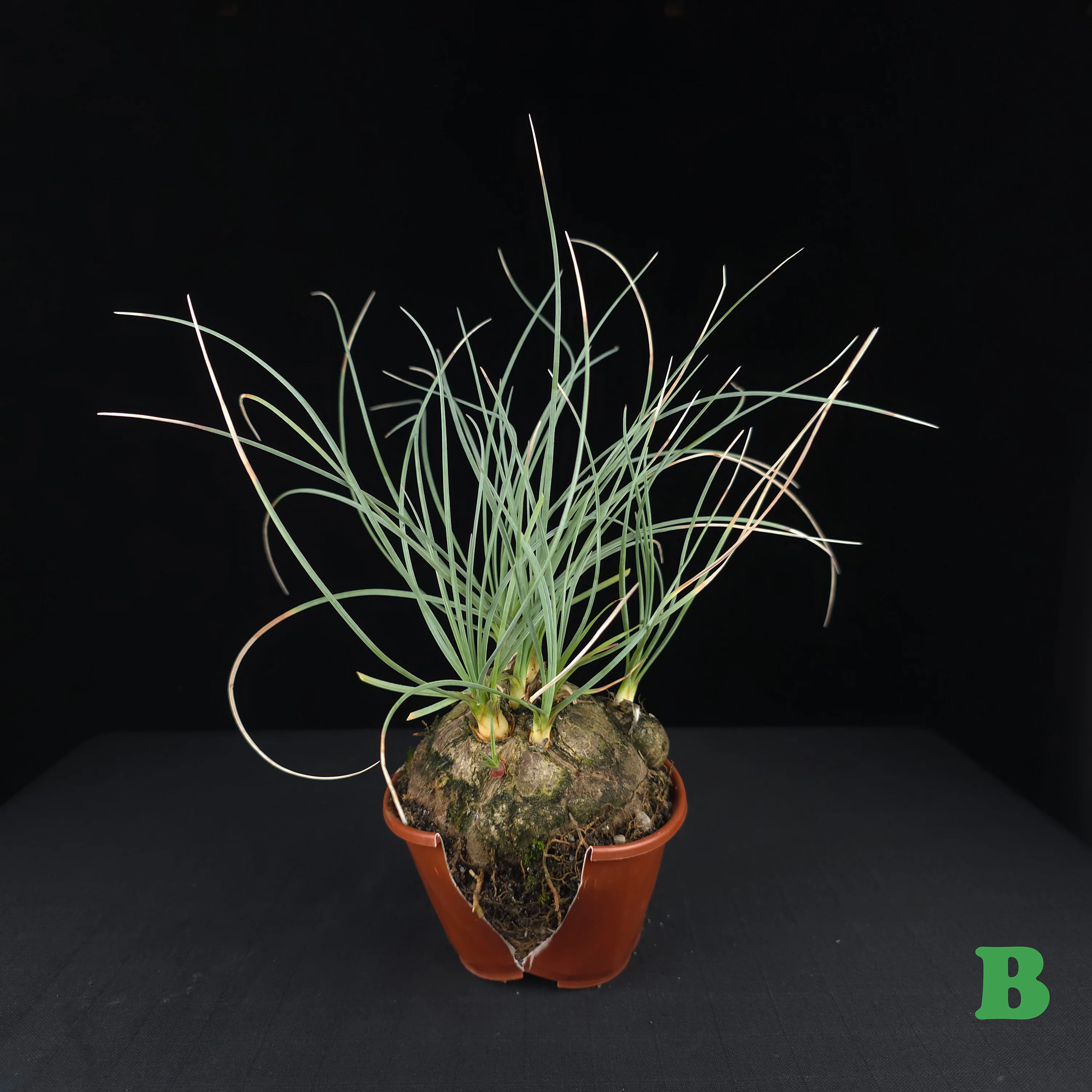
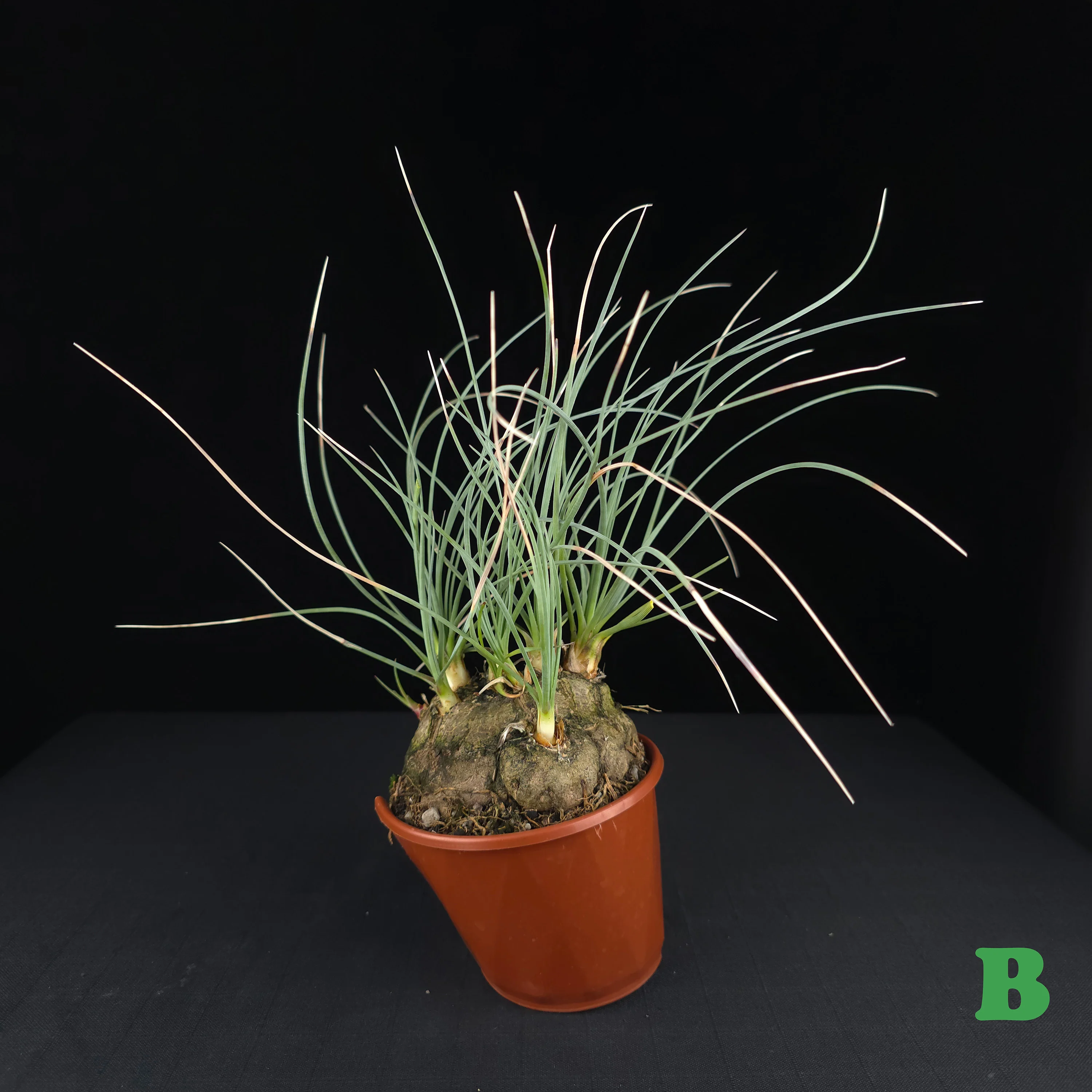
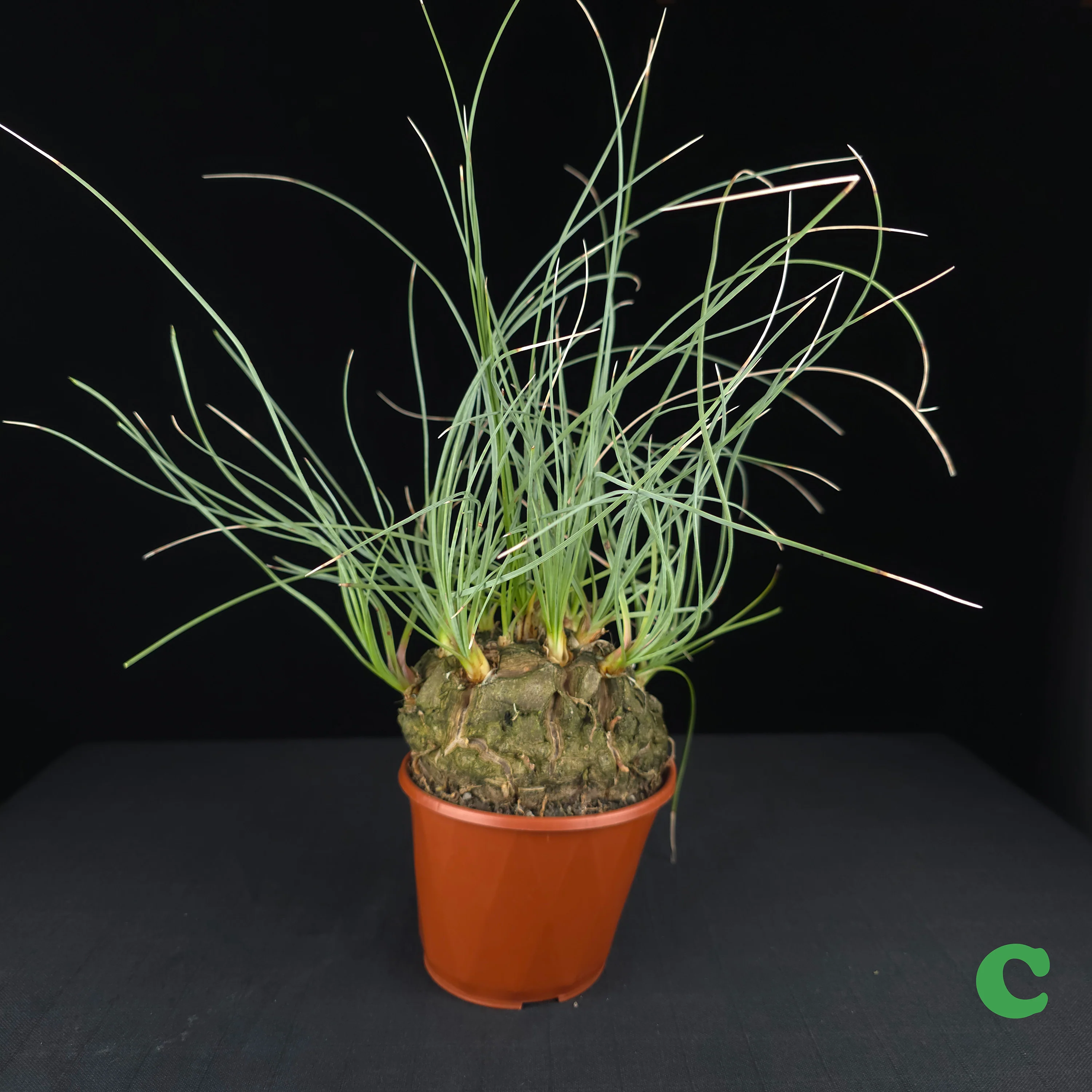
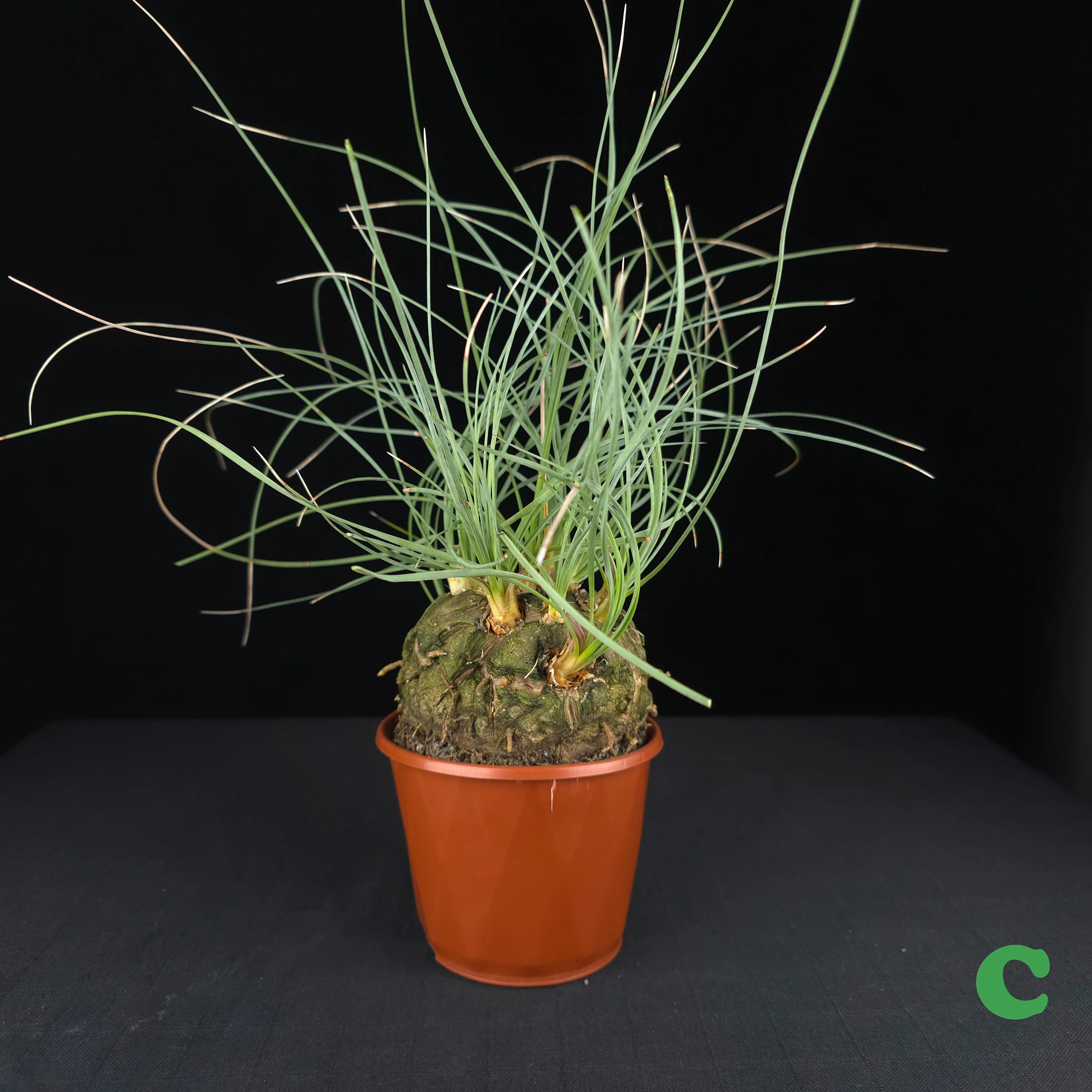
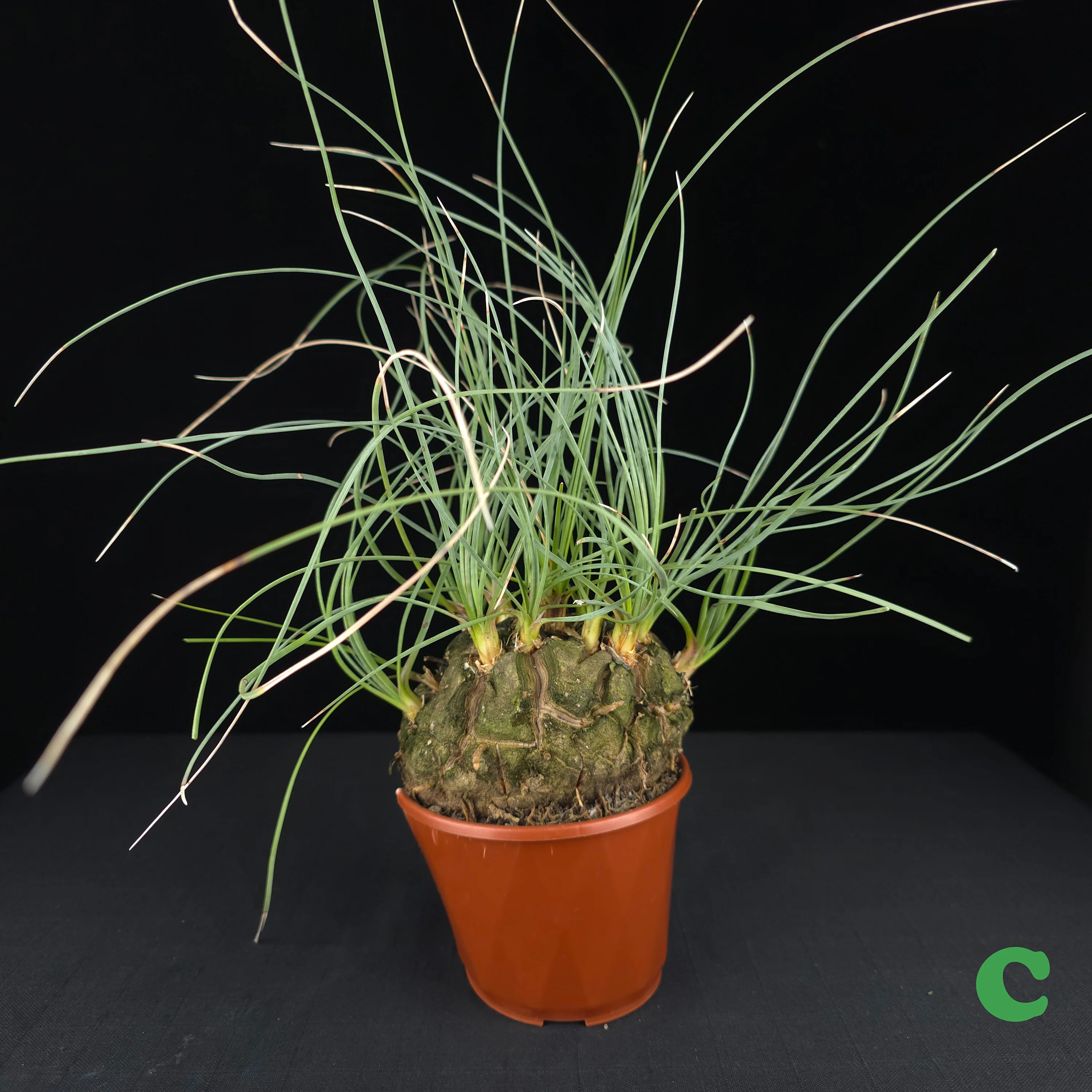
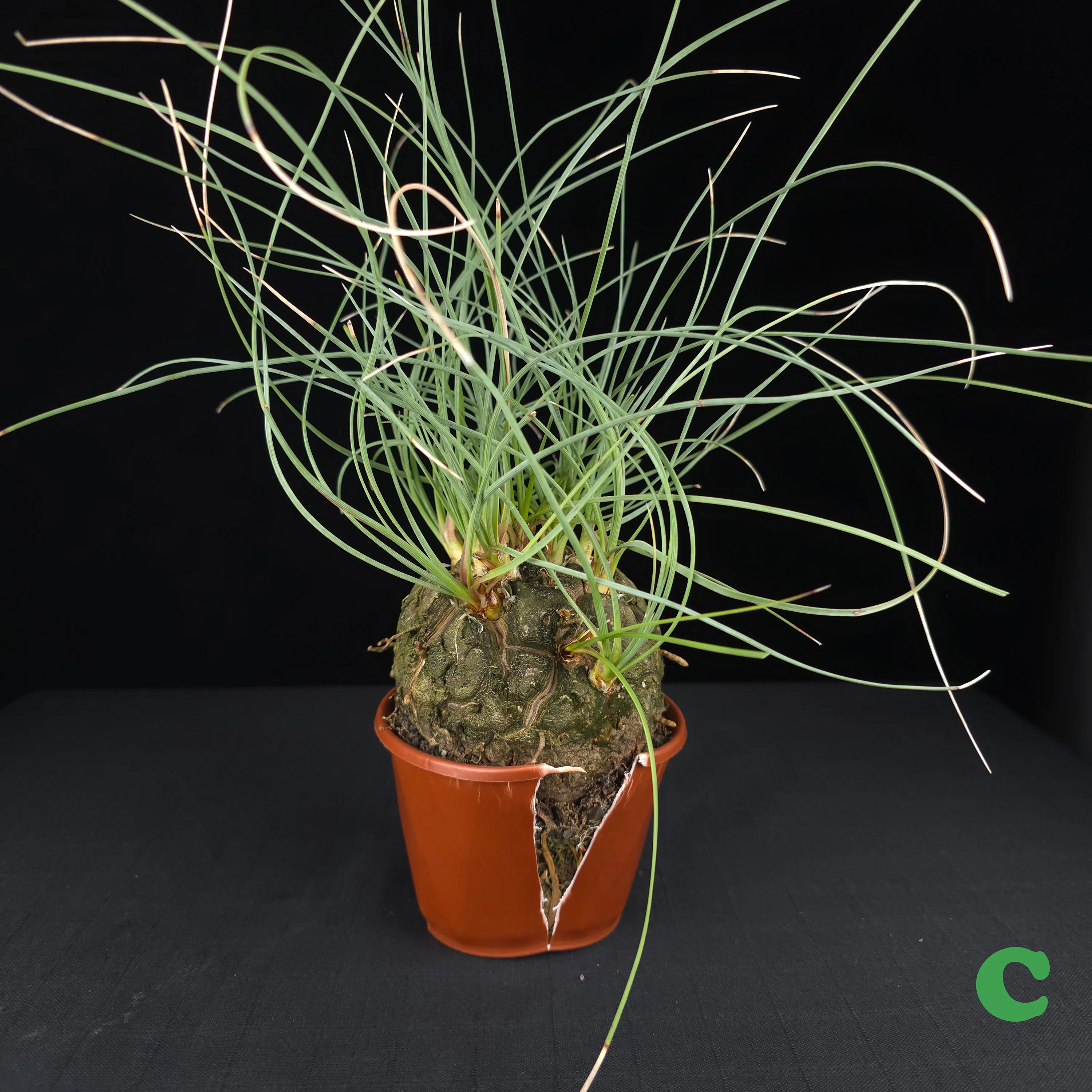
Calibanus hookeri is a slow-growing perennial native to northeastern Mexico, where it occurs in arid, rocky habitats with well-drained soils and full sun exposure. The species is known for its swollen, woody caudex that stores water, allowing it to tolerate extended dry periods. The narrow, grassy leaves emerge from the top of the caudex and can reach up to 1 metre in length. This species is the only recognised member of the genus Calibanus, and it belongs to the Asparagaceae family, subfamily Nolinoideae. Despite its resemblance to some bulbous or succulent plants, it is taxonomically distinct.
Distinctive features:
- Swollen, dome-shaped caudex that may reach over 30 cm in diameter
- Dense rosettes of linear, grass-like foliage arising from the top of the caudex
- Inflorescences develop from mature plants and bear small, greenish flowers on branched panicles
- Dioecious species, meaning male and female flowers are on separate plants
- Natural growth is slow and long-lived, often forming a rugged, aged appearance over time
Care Tips:
- Light: Requires high light; full sun preferred
- Water: Water sparingly; allow substrate to dry fully between waterings
- Humidity: Tolerates dry air; does not require additional humidity
- Media: Use a gritty, well-drained mix such as cactus or succulent soil with added perlite or pumice
- Temperature: Best grown above 10 °C; protect from frost
- Fertiliser: Apply a diluted low-nitrogen fertiliser during the active growing season (spring to summer)
- Repotting: Rarely needed; only when the caudex outgrows the pot, typically every few years
Product Information
Product Information
Shipping & Returns
Shipping & Returns
Description
Calibanus hookeri is a slow-growing perennial native to northeastern Mexico, where it occurs in arid, rocky habitats with well-drained soils and full sun exposure. The species is known for its swollen, woody caudex that stores water, allowing it to tolerate extended dry periods. The narrow, grassy leaves emerge from the top of the caudex and can reach up to 1 metre in length. This species is the only recognised member of the genus Calibanus, and it belongs to the Asparagaceae family, subfamily Nolinoideae. Despite its resemblance to some bulbous or succulent plants, it is taxonomically distinct.
Distinctive features:
- Swollen, dome-shaped caudex that may reach over 30 cm in diameter
- Dense rosettes of linear, grass-like foliage arising from the top of the caudex
- Inflorescences develop from mature plants and bear small, greenish flowers on branched panicles
- Dioecious species, meaning male and female flowers are on separate plants
- Natural growth is slow and long-lived, often forming a rugged, aged appearance over time
Care Tips:
- Light: Requires high light; full sun preferred
- Water: Water sparingly; allow substrate to dry fully between waterings
- Humidity: Tolerates dry air; does not require additional humidity
- Media: Use a gritty, well-drained mix such as cactus or succulent soil with added perlite or pumice
- Temperature: Best grown above 10 °C; protect from frost
- Fertiliser: Apply a diluted low-nitrogen fertiliser during the active growing season (spring to summer)
- Repotting: Rarely needed; only when the caudex outgrows the pot, typically every few years